IB Chemistry Study Summary

Periodic Trends

1
HL: Trends in Ionization Energy

General Trends in Ionization Energy

Ionization energy, defined as the energy required to remove one mole of electrons from one mole of gaseous atoms or ions, generally exhibits predictable trends across the periodic table. Moving from left to right across a period, ionization energy typically increases. This is primarily due to the increasing nuclear charge (number of protons) within the same principal energy level. As the nuclear charge increases, the electrostatic attraction between the positively charged nucleus and the negatively charged outer electrons becomes stronger, requiring more energy to remove an electron. Conversely, as one moves down a group, ionization energy generally decreases. This trend is attributed to the increasing distance between the nucleus and the outermost electrons, as well as increased shielding by inner electron shells. With greater distance and shielding, the electrostatic attraction experienced by the valence electrons is reduced, making them easier to remove and thus requiring less energy.
Diagram

Discontinuities and Evidence for Sub-levels

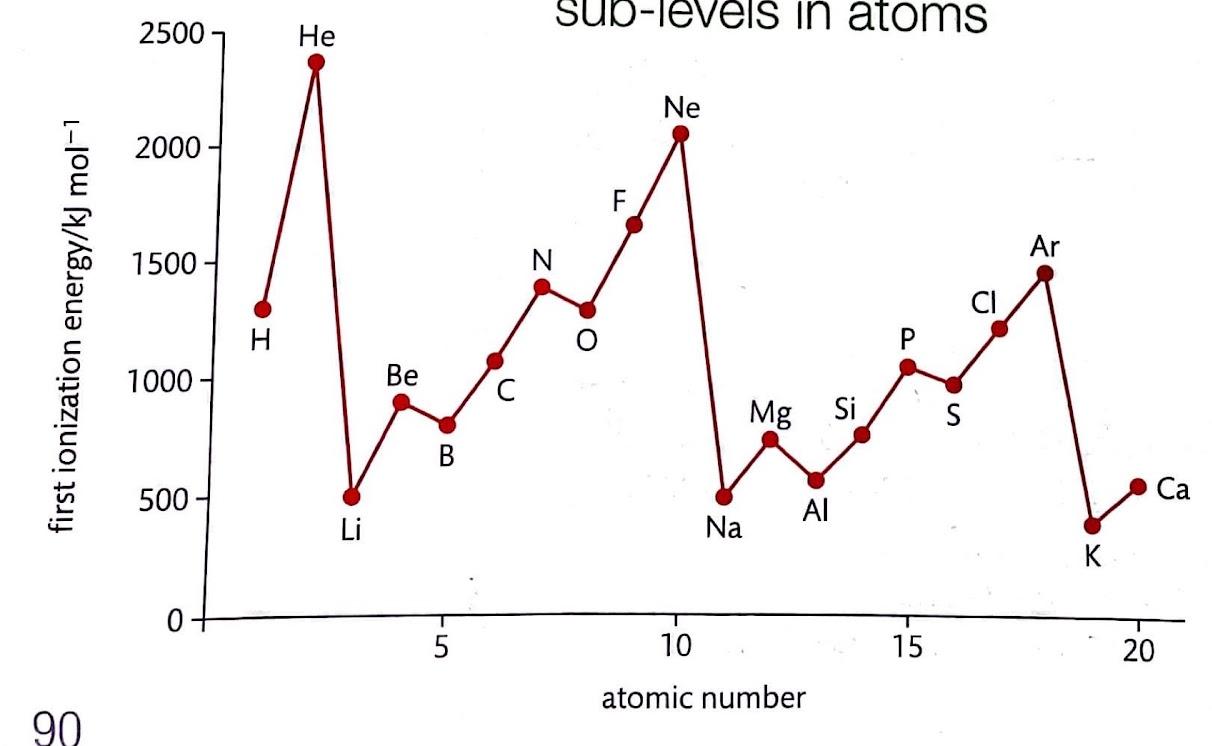
While the general trends in ionization energy are clear, there are notable discontinuities or "dips" in the ionization energy values when moving across a period. These deviations from the general trend provide crucial experimental evidence for the existence of sub-levels (s, p, d, f) within electron shells. For example, the first ionization energy of boron (B) is lower than that of beryllium (Be), even though boron has a higher nuclear charge. This is because beryllium's outermost electron is in a 2s orbital, while boron's outermost electron is in a 2p orbital. The 2p electron is at a slightly higher energy level and experiences more shielding from the 2s electrons, making it easier to remove. Similarly, the first ionization energy of oxygen (O) is lower than that of nitrogen (N). Nitrogen has a half-filled 2p sub-level (2p3), which is relatively stable due to Hund's rule. Oxygen, with a 2p4 configuration, has one paired electron in a 2p orbital. The repulsion between these paired electrons makes it slightly easier to remove one of them compared to removing an electron from the stable half-filled 2p sub-level of nitrogen. These discontinuities, therefore, offer direct insight into the electronic structure of atoms and the arrangement of electrons within sub-levels.
Diagram
2
HL: IE Evidence for Energy Levels

Successive Ionization Energies and Nuclear Attraction

As electrons are progressively removed from an atom, the ionization energy, which is the energy required to detach an electron, consistently increases. This phenomenon occurs because with each electron removed, the remaining electrons experience a stronger effective nuclear charge. The positive charge of the nucleus remains constant, but the number of negatively charged electrons decreases, leading to less electron-electron repulsion and a greater net attractive force from the nucleus on the remaining electrons. Consequently, more energy is required to overcome this enhanced attraction and remove subsequent electrons.

Evidence for Discrete Energy Levels from Ionization Energies

The analysis of successive ionization energies provides compelling evidence for the existence of discrete energy levels within an atom. While there is a general trend of increasing ionization energy, significant "jumps" or large increases in ionization energy are observed when an electron is removed from a new, inner electron shell or energy level. These substantial increases indicate that the electron being removed is much closer to the nucleus and therefore experiences a significantly stronger electrostatic attraction, requiring considerably more energy to overcome. This pattern strongly supports the quantum mechanical model of the atom, where electrons occupy distinct energy shells or levels rather than being randomly distributed.

Ionization Energies of Aluminum

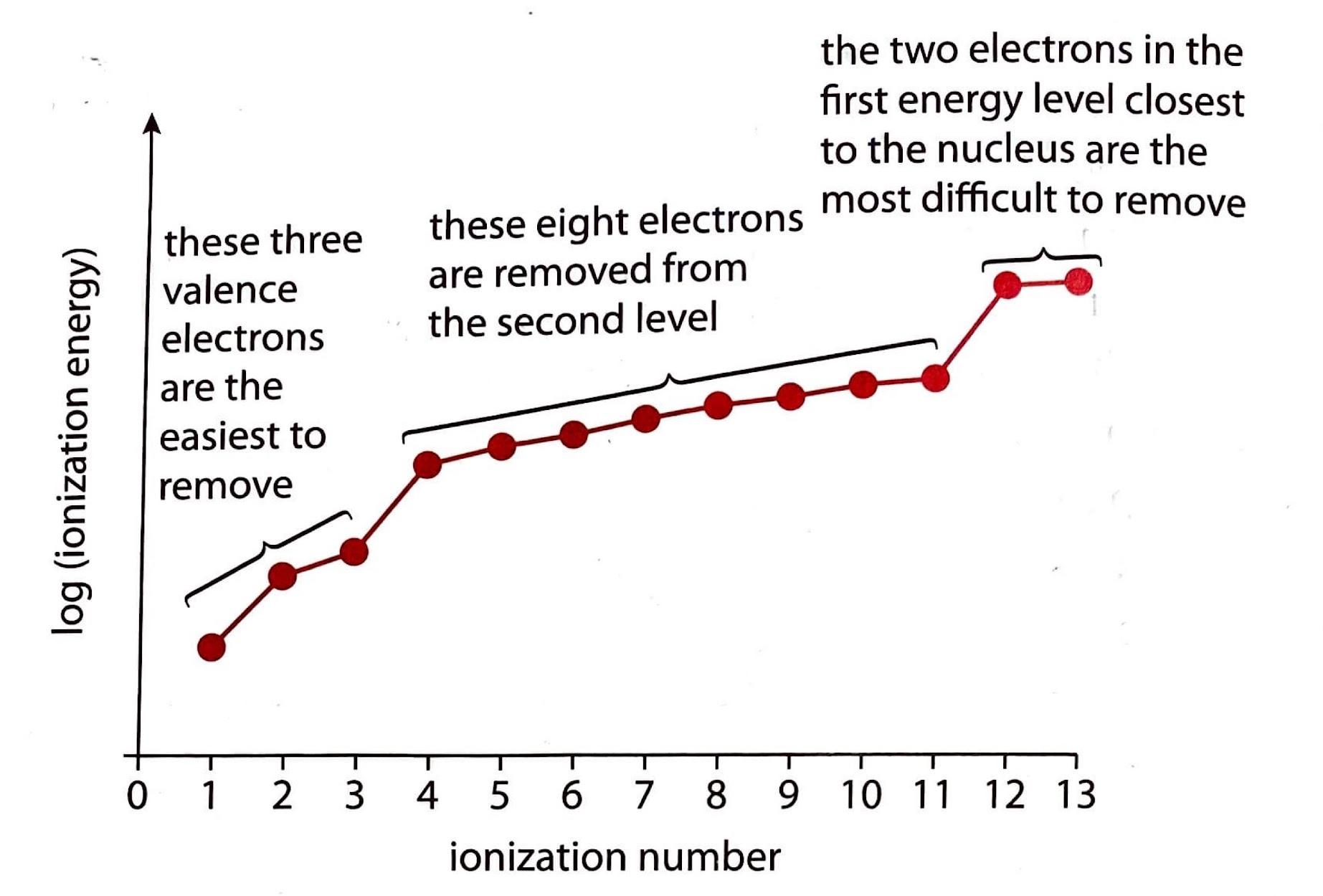
The ionization energies for aluminum (Al) serve as an excellent example to illustrate these principles.
Diagram
The first ionization energy corresponds to the removal of the outermost electron, which is relatively easy. The second and third ionization energies are progressively higher, reflecting the increased nuclear attraction on the remaining electrons within the same valence shell. However, a much larger jump in ionization energy is observed when attempting to remove the fourth electron. This dramatic increase signifies that the fourth electron is being removed from a new, inner electron shell, which is much closer to the nucleus and thus held far more tightly. This pattern continues for subsequent electrons, with large jumps occurring as electrons are removed from progressively inner shells, providing clear experimental evidence for the quantized nature of electron energy levels.
3
HL: IE Evidence for Sublevels

Evidence for Sublevels from Ionization Energies

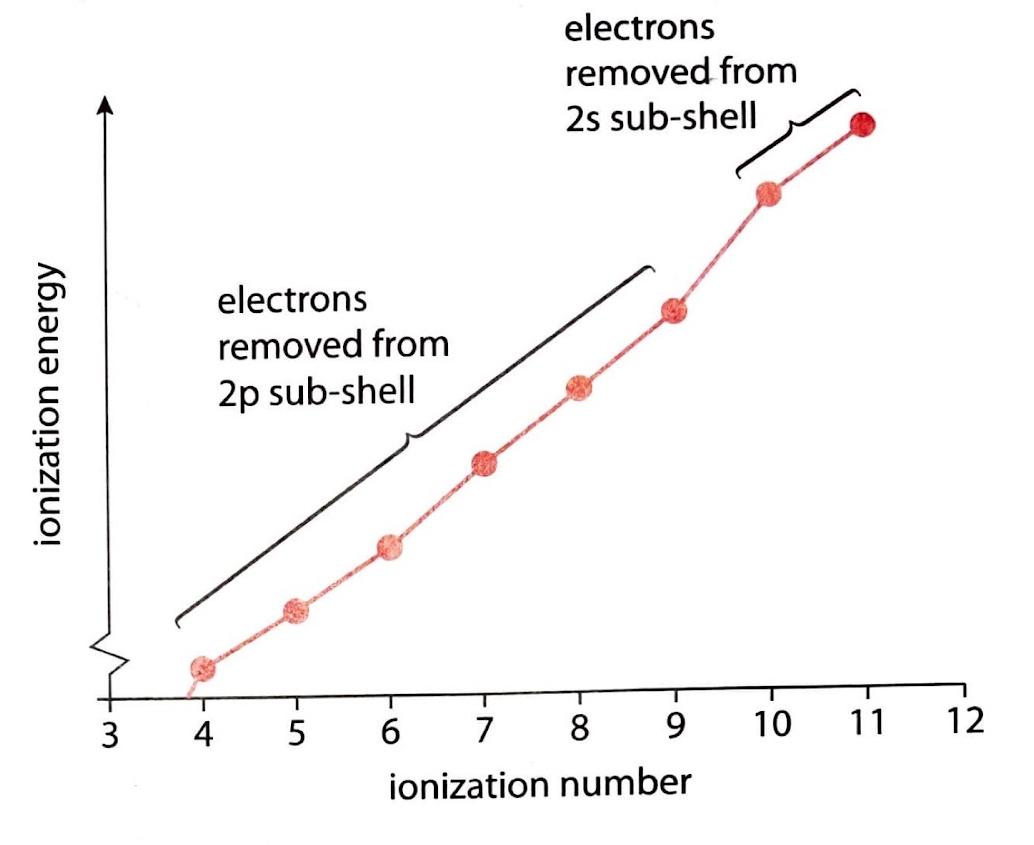
Ionization energies provide compelling evidence for the existence of electron sublevels within an atom's electron shell structure. A significant "jump" in the energy required to remove successive electrons indicates that the electron being removed is from a different, more stable energy level or sublevel. For instance, if we observe a substantial increase between the 9th and 10th ionization energies, it suggests that the 10th electron is considerably more difficult to remove than the preceding nine. This difficulty implies that the 10th electron resides in a more deeply bound sublevel, requiring a greater input of energy to overcome the increased nuclear attraction.

Ionization Energies of Aluminum

The ionization energies for aluminum (Al) clearly illustrate this principle. As electrons are progressively removed from an aluminum atom, the energy required for each subsequent removal generally increases due to the increasing effective nuclear charge on the remaining electrons. However, a particularly large increase, or "jump," in ionization energy signifies the removal of an electron from a new, more stable sublevel.
Diagram

Sublevel Contributions to Ionization Energy Trends

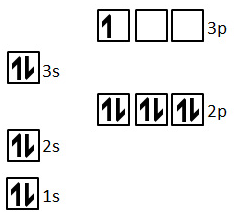
When examining the ionization energies of an element like aluminum, the specific values for each successive electron removal reveal the underlying electron configuration. For example, consider the ionization energies associated with removing electrons from the 2p sublevel. The first three electrons removed from this sublevel (corresponding to the 4th, 5th, and 6th ionization energies overall for an atom with a 2p sublevel) generally require less energy than removing the fourth electron (the 7th ionization energy). This phenomenon is attributed to electron-pair repulsion.
Diagram
In the 2p sublevel, electrons are paired up after the first three electrons have been removed (assuming a typical filling order). When electrons are paired within an orbital, the electrostatic repulsion between them makes it slightly easier to remove one of these paired electrons compared to an unpaired electron in a half-filled orbital or a new, more stable sublevel. Therefore, the 4th, 5th, and 6th ionization energies, which correspond to removing electrons that are experiencing electron-pair repulsion, are lower than the 7th ionization energy, which might involve removing an electron from a more stable, inner sublevel or an unpaired electron from a different orbital. This pattern provides direct evidence for the distinct energy levels and sublevels within an atom.